Exhibition “Robots & Space Toys” at the Museum van de Twintigste Eeuw
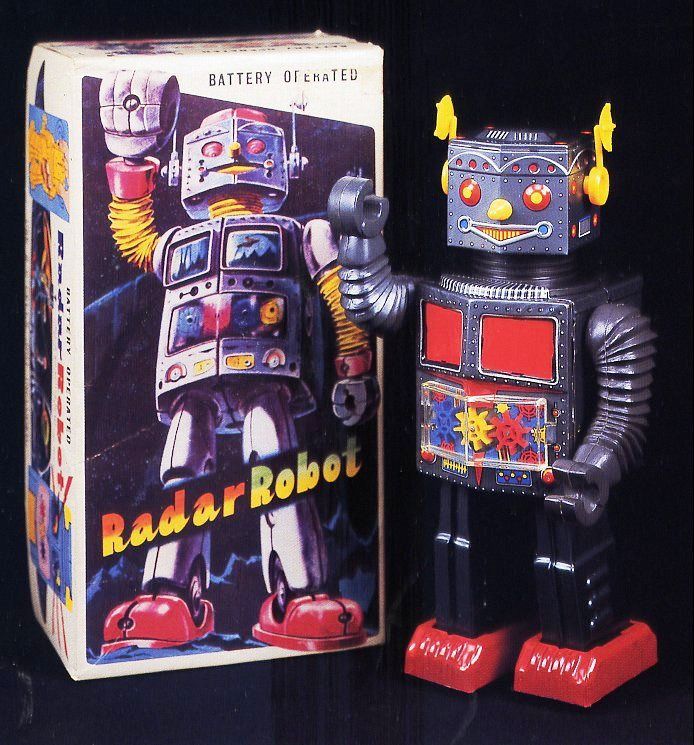
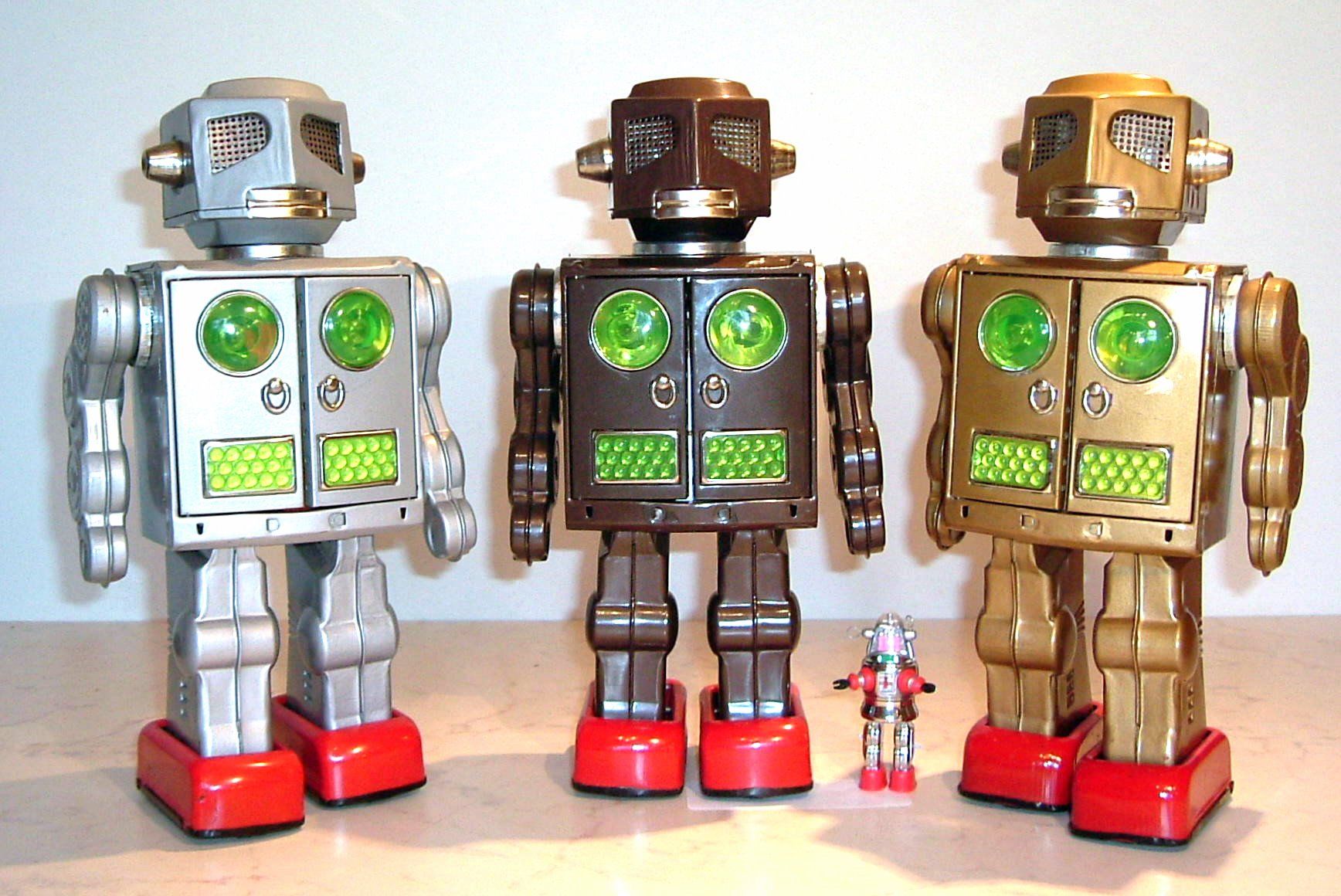
HOORN – Two remarkable collections form the basis of the new exhibition "Robots & Space Toys" (17-11-2012 to 28-4-2013) at the Museum van de Twintigste Eeuw. The late 'art storyteller' Pierre Janssen loved not only art but also toy robots, and his collection can now be seen in the museum. Also on show are rare and unique 1950s and 1960s robots and 'space toys' from collector Marco van Gimst.
Together the two collections give a wonderful picture of the popular robot and space-themed toys of the 1950s, 60s and 70s. It was the "Golden Age" of robots and space toys. At first (in the 1950s and 60s) robots and space toys were mainly made of tin, mostly in Japan. Later (in the 1970s) more and more plastic was used to save costs, and production moved to Hong Kong and later China.
The collections on show include unique and rare examples such as the legendary Gang of Five, a series of so-called Skirted Robots made in Japan between 1957 and 1965. Among them is the very first radio-controlled robot (Radicon Robot) as well as one of the rarest robots of this era: Machine Man. This robot, the 5th member of the Gang, was in fact only discovered by chance in 1997. Only 12 examples are currently known worldwide, just 2 of them with their original box.
The collection also shows legendary robots such as Mr Atomic in the rare blue colour, Diamond Planet Robot, the complete Gang of Five and many rare variants with beautiful original boxes and accompanying artwork. That is why the exhibition is interesting not only for a broad public but also for collectors and enthusiasts.
Art expert Pierre Janssen and his robots
Many people over 50 remember art expert, TV presenter and museum director Pierre Janssen (1926-2007). In his characteristic way he talked on television about paintings and other works of art. His long arms with quivering fingers and his enthusiasm were legendary. What not everyone knew was that he also collected toy robots. More than thirty years ago they were shown in what was then his own museum in Arnhem, and a few years ago in a toy museum. Now the whole collection is proudly on display in a former prison in Hoorn. On an island by the harbour (the Oostereiland, reached by a bridge) is where the Museum van de Twintigste Eeuw is located.
Highlights such as Machine Man and Diamond Planet Robot
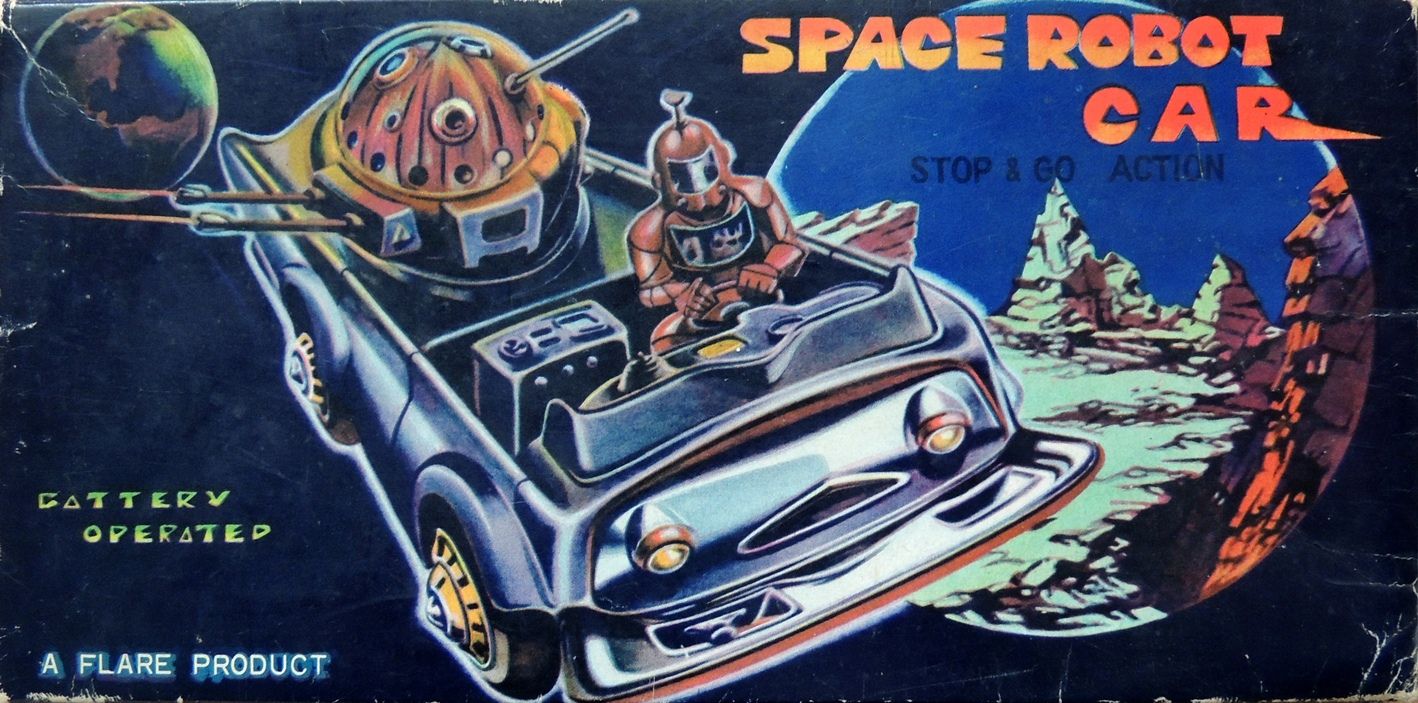
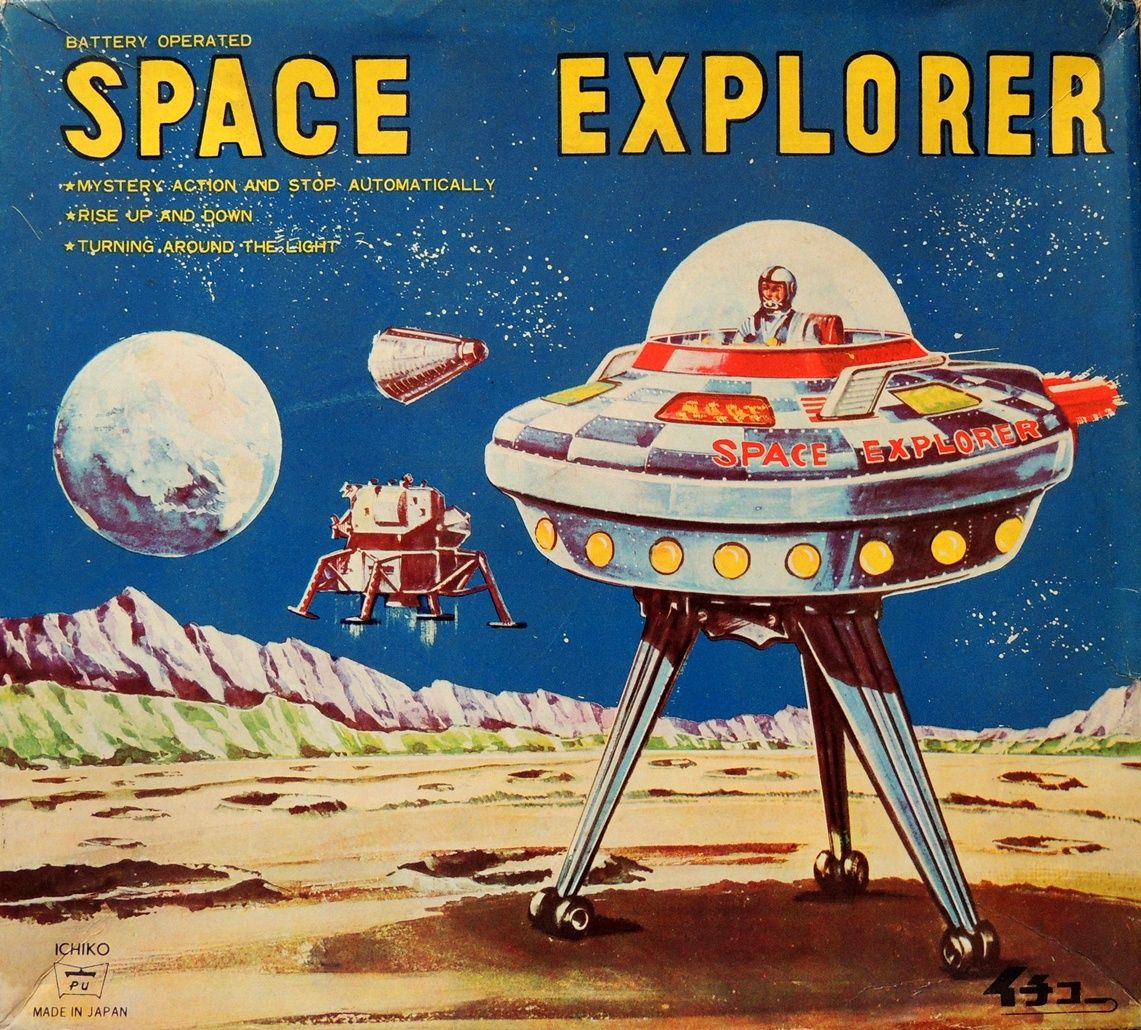
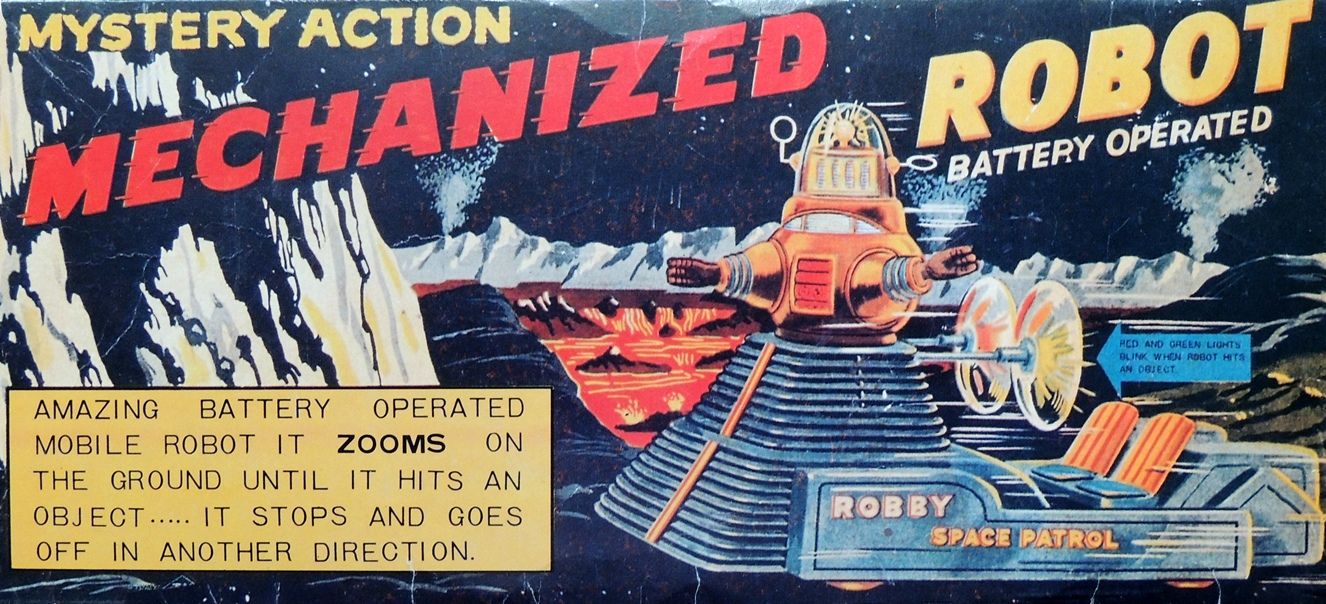
The exhibition "Robots & Space Toys" also shows a large part of the unique collection of collector Marco van Gimst. More than 200 rare robots and space toys from the 1950s and 60s, including the Gang of Five, Diamond Planet Robot, Radicon Robot, Mechanized Robby Robot with C-Cell Battery, but also rare space toys, rockets and flying saucers of which sometimes only a few examples are known worldwide. A unique collection, never shown before in the Netherlands, with very rare and often unique pieces.
"Lift off" ... with Yonezawa Space Patrol 2019
Robot collector Marco van Gimst, born in 1967, was already playing with batteries, little lights and wires as a child, and took everything apart, curious about how it worked. His flying saucer from that time did not survive this either. Later, while searching for this flying saucer, he found an old Japanese robot for his son at a flea market. He repaired it and his son played with it enthusiastically. Looking for information about this robot, he came across the flying saucer he remembered from his childhood – the foundation was laid, and there was no stopping his passion for collecting.
Before long he found, via the internet, the flying saucer Yonezawa Space Patrol 2019, made in Japan (1967), and so laid the foundation for an impressive collection of robots, space toys, rockets and flying saucers. Marco van Gimst's website, http://vintagespacetoys.com , is now known worldwide among collectors of robots and space toys and is a source of information on classic Japanese robots and space toys from the 1950s and 60s.
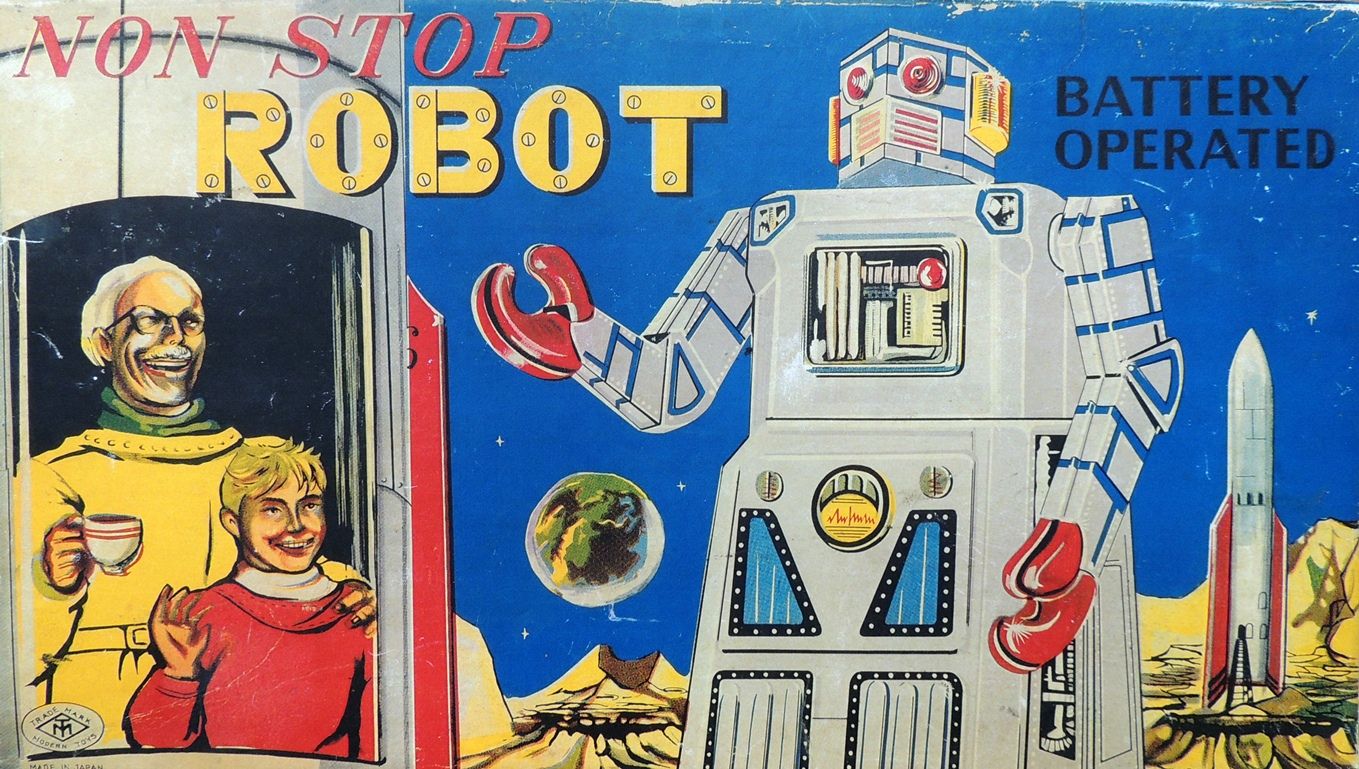
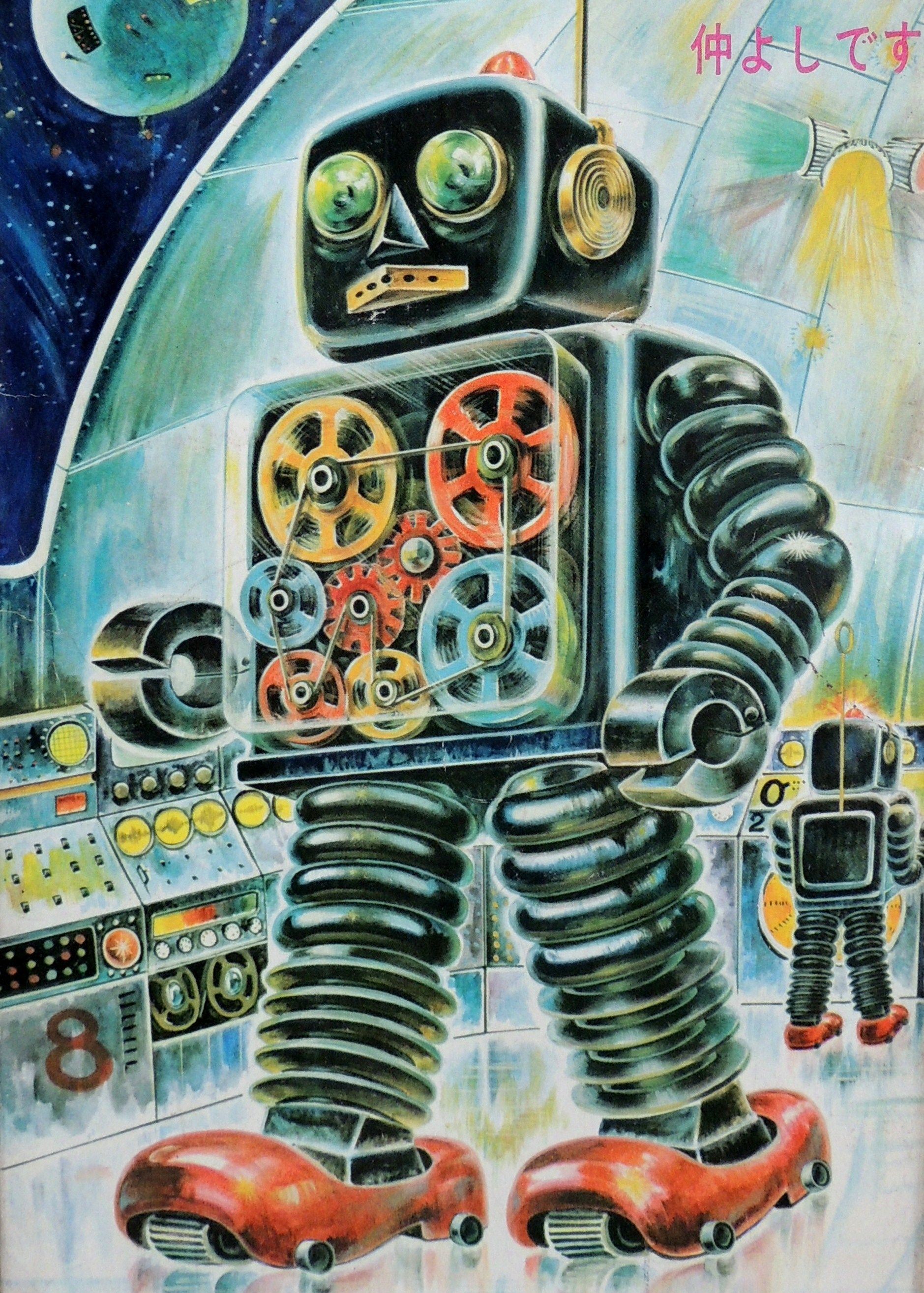
The wonderful thing about these robots and space toys is that until 1969 (the Moon landing) they were all based on the imagination of the Japanese toy industry, and although the toys were produced in large numbers, they are often true works of art, not only technically but also in terms of artwork. Toy robots made up of more than 300 separate parts, assembled by hand, and artwork on the boxes of the robots and space toys of unprecedented class and quality. And although the Japanese translations of the toys' features into English (look closely at the texts on the boxes) sometimes left something to be desired, they give a fantastic picture of this finest era for children's toys.
Science fiction films
In between all the robots and space toys, posters and clips from classic science fiction films are also shown. Some robot figures can in fact be traced back to (cult) films of the 1950s and 60s, such as "Forbidden Planet", "Flying Saucers Attack!" and "The Invisible Boy". A striking film that can also be seen at the exhibition is called "Robot One". Film-maker Thijs Ockersen made this documentary at the end of the seventies with Pierre Janssen's wind-up and battery robots. In some clips the art expert crawls across the floor with his wound-up robots.
For today's children too
Although most of the toys are safely behind glass, children can also play with some modern robots. Using the remote control, they can steer a few medium-sized robots from 2012. There is also a play table with some retro tin robots that still have to be wound up the traditional way with a key. Grandpa and grandson can happily simulate a space battle there. On several afternoons ( check www.museumhoorn.nl ) the museum will also let children build their own robot using toilet rolls, cans and silver foil, among other things.
The rise and end of the "Golden Age" of robots and space toys
Sputnik
Science fiction films and the launch of the Russian Sputniks made space travel hugely popular in the 1950s. Films such as Destination Moon ( 1950 ), The day the Earth stood still (1952) and Forbidden Planet (1956) made flying saucers, rockets and robots popular not only with children but also with adults. Japanese toy manufacturers in particular seized on this and made countless tin robots and space toys that went all over the world.
Mercury
At the end of the 1950s the Americans started their Mercury programme, aiming to send the first human on a flight around the Earth. The Russians managed it just before them with Yuri Gagarin, who became a national hero. With the space race between the two superpowers, space travel was no longer just something for comic books and toy manufacturers. There were now real examples of spacecraft, both for children and for toy designers. Mercury, Gemini and later Apollo served as models for detailed designs.
Made in Japan....
In the 1960s robots and other space toys were still mainly produced in Japan. But in the 1970s "Made in Japan" would often disappear from the toys. Labour in Japan had become too expensive, and other countries such as Hong Kong, Taiwan and later China took over. But the general public had also become less interested in 'outer space'. Space flights had become ordinary. Only in 1977 was there a revival, with the arrival of George Lucas's film Star Wars. For collectors of space toys, the 1950s and 60s are therefore the finest decades.
Replica robots in the MuseumShop
Robots and the like are also on sale in the spacious MuseumShop. Not the originals, as they are too expensive for many people, but exact copies with the same old-fashioned wind-up mechanisms and beautiful packaging. By now even these replicas have become collector's items.
Museum information
At the Museum van de Twintigste Eeuw you can see very clearly how your (grand)parents lived. You can also hear a lot about it. You don't need to read, because you can pick up the free Children's Audio Tour, and there is also an 'adult' version for your family. In the museum you will also see the very first computers, the forerunners of your MP3 player, a gallery full of toys, an old-fashioned shopping street and countless old interiors. The museum is open 7 days a week and is housed in an old prison on the Oostereiland by the harbour of Hoorn. The museum's website, www.museumhoorn.nl , also has information about parking and a shuttle bus to the station and car park.