Exhibition: Women in the 20th Century
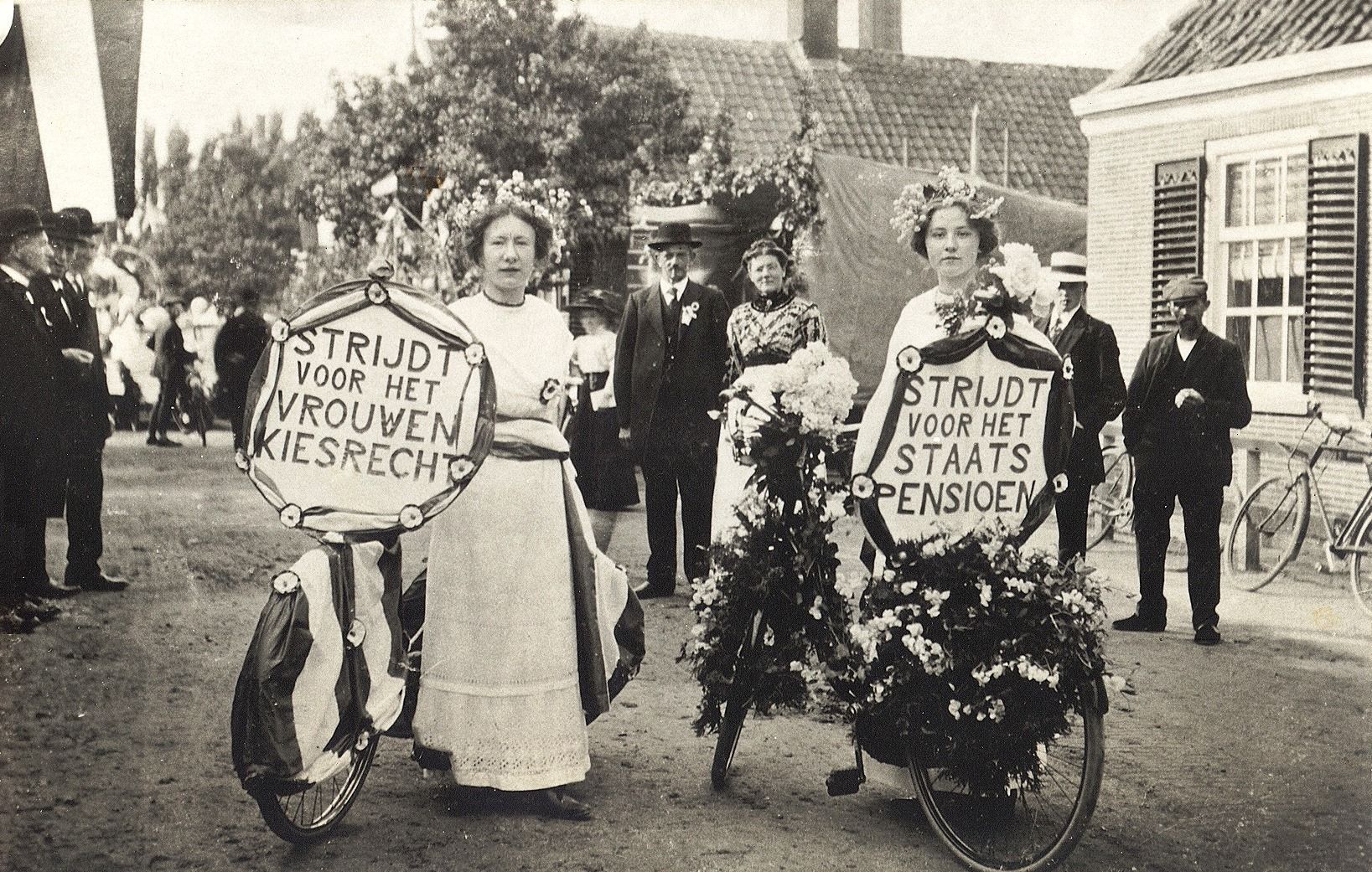
HOORN – A great deal changed in women's lives in the twentieth century. The exhibition "De vrouw in de 20e eeuw" (Women in the 20th Century) and the book "Pittige Moide" (West Frisian for 'Spirited Women') make that very clear. At the Museum van de Twintigste Eeuw the exhibition opens on 12 May 2013, Mother's Day, and the first copy of the book will be presented.
A lot changed in the last century, certainly for women too. Education, work, religion, housekeeping, politics, leisure, relationships. Women took matters into their own hands. Through personal stories of women, a history of women in the twentieth century is told. Countless objects bear witness to the many social developments.
At the exhibition, many West Frisian women talk about their experiences. The women were interviewed for the book "Pittige moide", and countless objects from the museum's collection support their stories. The beautiful book "Pittige moide" is on sale in the MuseumShop of the Museum van de Twintigste Eeuw from 12 May.
Sex education
Many women from before 1960 said that their mothers told them little or nothing about the facts of life. 'We never had any sex education. You heard about it from your older sisters. I remember seeing a bucket of dirty water with cloths in it. I asked mother: "What are those for?" She answered: "I'll tell you later." As you can imagine: I'm still waiting! When I got my own first period it was awful; I was told: "Just put this on and that's that!"'
Contraceptives a punishable offence
Especially in Catholic villages, a large family was considered a blessing. In 1940 the Wognum municipal council stated that possessing contraceptives was a punishable offence. The sixties brought the sexual revolution. Contraceptives such as the pill slowly became commonplace, among the Catholic population too.
Few girls at school
Around 1900 the only form of pre-university education in Hoorn was the hbs (a type of secondary school). At that time it had 86 pupils, 10 of them girls. Other secondary education consisted of the Sewing School, the Drawing, Music and Singing School, and the Burgeravondschool (evening school). In the countryside, few girls were allowed to continue their education. After the Second World War this changed a little. There was a shortage of teachers, and even married women were appointed as teachers. But as a woman you were dismissed when you got married, since married women were not expected to work.
Married women were not allowed to work
In 1947 minister Beel issued a request that the employment of married women should be restricted as much as possible. Only in 1955 was a motion passed stating that it was not the government's task to forbid married women from working.
Sewing school
'When I turned twelve (in 1950) there was no question of continuing my education. My parents had a small grocer's shop and they employed a woman to do the cleaning for 5 guilders a day. When I left school it went without saying that I would take over that job, only I got five guilders a week. I worked every morning, and in the afternoons I was allowed to go to sewing school'.
Moedermavo
The first "Moedermavo" (secondary school courses for adult women, literally 'mothers' school') started in 1975. It gave many women a second chance and contributed greatly to emancipation. One woman's husband allowed her to go to school, as long as the hot meal was on the table at half past twelve.
These and many other anecdotes can be read at the exhibition "De vrouw in de 20e eeuw" at the Museum van de Twintigste Eeuw, from 12 May to 29 September 2013.