Last chance to see the Holocaust exhibition
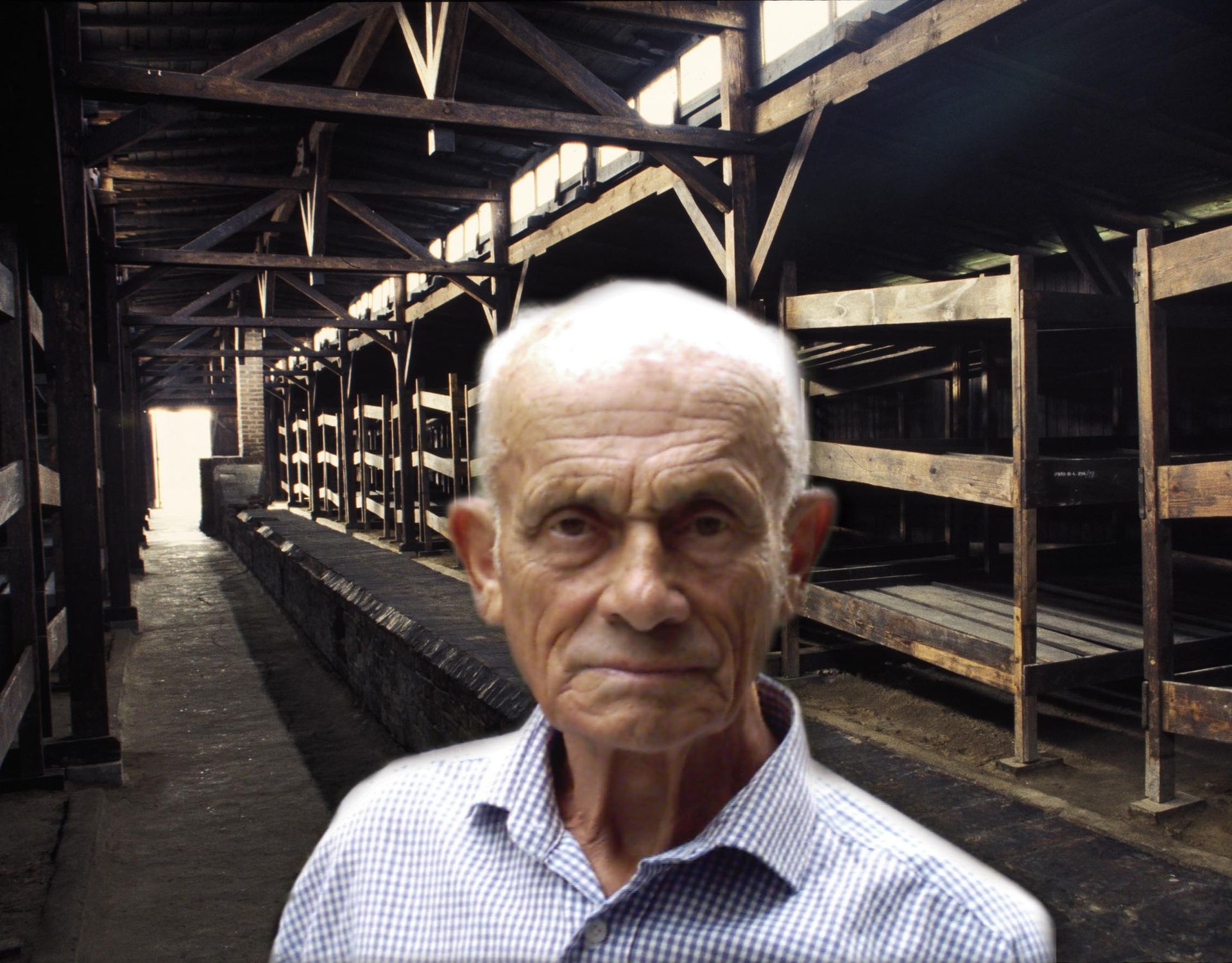
HOORN – How do you survive 27 months in various concentration camps? And after the war you discover that your family has been wiped out and that you literally own nothing any more. What do you do on your return when the government fobs you off with 25 guilders? How do you then view humanity, and how do you pick up the threads of your life again? The Museum van de Twintigste Eeuw tries to answer these questions with an exhibition about the horrific experiences of Rob Cohen. In the exhibition, his own voice tells of his time in Auschwitz, among other places, of the death of his parents in Sobibor, and of why he remained silent for so long but now speaks very actively about his experiences. On show at the Museum van de Twintigste Eeuw until 16 May 2010.
Rob Cohen, now 84 and living in Delft, tells of his “victory over the Nazis” in the exhibition “Rob Cohen, overlevende Holocaust” (Rob Cohen, Holocaust Survivor). All visitors receive a free audio tour and can listen to his experiences at their own pace and in their own order while viewing the exhibition. Cohen was 14 when German troops marched into his home city of Amsterdam. His father, mother, brother and his entire family were murdered in the Sobibor extermination camp. He himself survived 27 months in various concentration camps, including 11 months in Auschwitz/Birkenau, and returned to the Netherlands after the war.
Talks and a book
For years he kept silent about his experiences, mainly so as not to burden his daughter. But since the early 1990s he has regularly given talks at schools and universities throughout the country. He manages to hold his audiences spellbound for hours; he does not give talks shorter than four hours. Uitgeverij Verbum has published his book “Niet klein te krijgen – Mijn overwinning op de nazi’s” (Unbreakable – My Victory over the Nazis) in its Holocaust Library series. This book is also on sale in the museum's Museum Shop.
An exhibition in ‘his own museum’
Hans Stuijfbergen and Harry van Lunteren, founders of the Museum van de Twintigste Eeuw, came into contact in the early 1990s with Rob Cohen, who gave his enormous collection of everyday objects to the Museum on long-term loan. He also made his knowledge available, and they always remained in close contact with him. The Museum is honoured to be able to show Rob Cohen's experiences in an exhibition that will make a deep impression on everyone. “In the coming months we will reflect not only on the fact that 65 years ago the whole of the Netherlands was liberated, but also on all those camps throughout Europe where hundreds of thousands of people who had survived all that misery were liberated by the Americans and Russians, among others. Rob Cohen was one of them, and it is good that he can and will share his experiences.” So says Hans Stuijfbergen, director of the museum, who in fact had been carrying the plan for the exhibition around with him for fifteen years.
Important for young people
The museum does not consider the Holocaust exhibition suitable for children under 10, because it shows realistic and harrowing images from concentration camps. The exhibition is, however, very suitable for secondary schools. The museum therefore hopes that many school classes will visit the exhibition. Hans Stuijfbergen: “We think it is very important that young people also know enough about the war and the mass extermination that took place. Again and again stories crop up, including on the Internet, from people who claim that this genocide did not take place, or not on this scale. That is frightening, and that is why we are proud to be able to inform people about it through the impressive experiences of Rob Cohen. After all, the 6 million Jews who were killed remain unimaginable, and that is what makes the story of one person who escaped it, but lost his whole family, so moving.”
Shocking images
The Museum van de Twintigste Eeuw has chosen to also show horrifying photographs and film footage of the Nazis' mass extermination. That includes emaciated bodies, piles of corpses, gas chambers and ovens, etc. Young people are of course used to a lot from films and games, but these images will certainly make a deep impression. The Museum also draws on the enormous collection of documentaries about the Holocaust that Cohen has gathered.
Vught and Westerbork
Through the experiences of Rob Cohen, the exhibition “Rob Cohen, overlevende Holocaust” tells how Hitler wanted to destroy the “Untermensch”. Various objects can be seen, such as the yellow Star of David and money from concentration camps. Also the few photographs of the Cohen family that have survived. We see his parents in front of their shop in the Staalstraat in Amsterdam, and there is a photograph of his musical brother, who also did not survive the war. Cohen talks about his experiences in camps such as Vught, Westerbork, Auschwitz/Birkenau, Mauthausen, Dora and Steyr. About the Death Marches, the 10-day journey in an open wagon, his work for the Erste SS-Baubrigade, and digging tunnels for the construction of the V2 rockets. His life after the liberation is also covered: his 35 months of military service after the war in Vught, his wife Bep, and the long silence about the war.
Audio tour
Recently, at the museum's request, the 83-year-old Cohen recorded his experiences, and these recordings can be heard in the exhibition. Every visitor receives a so-called Podcatcher with an audio tour that responds to objects and photographs in the exhibition.
The exhibition “Rob Cohen, overlevende Holocaust” can be seen until 16 May 2010 at the Museum van de Twintigste Eeuw, Bierkade 4 in Hoorn. Opening hours: Tuesday to Friday 10 am–5 pm and Saturday and Sunday 12 noon–5 pm